
Mind's Eye
Collected Poems by Lawrence Durrell

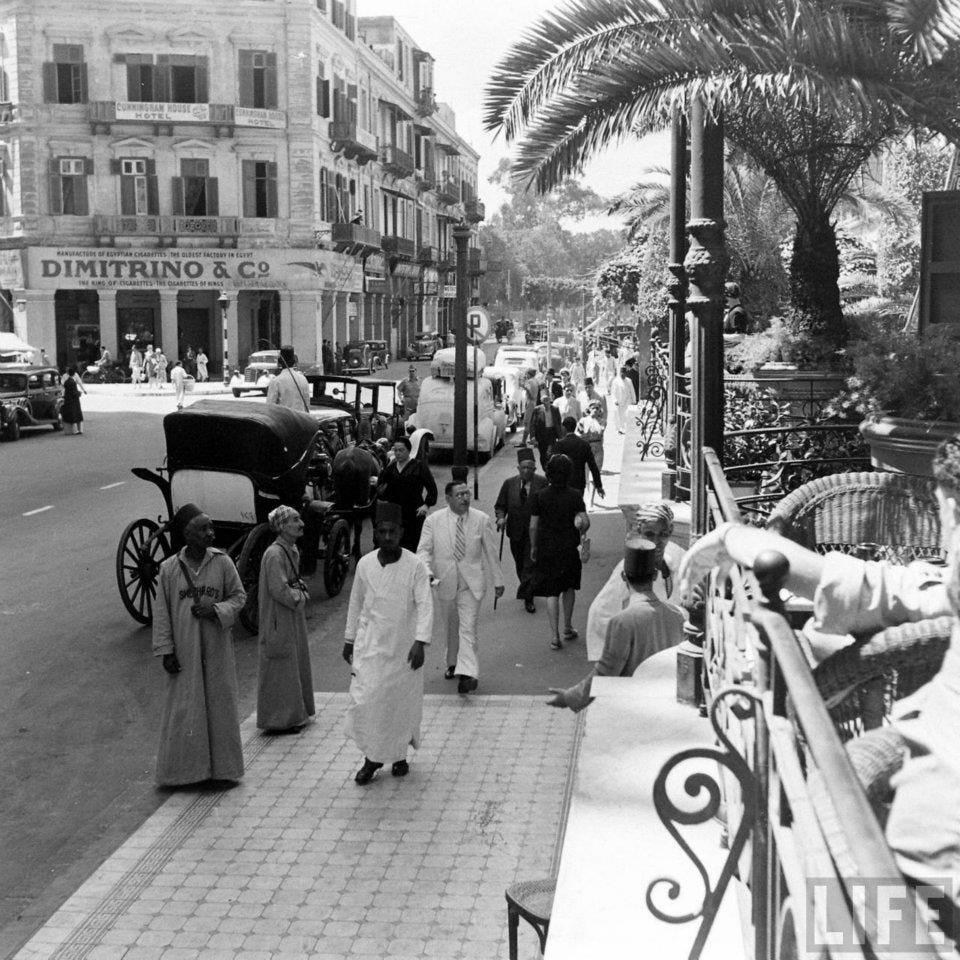
It would perhaps be a little too much to presume that a collected edition of a poet’s work have some overarching, undergirding principles of style or tone. Writers age, they read, they think. In Lawrence Durrell’s case especially, they travel. What a young man in love with his own cleverness thinks is profound and perfectly put, an older man admits to be overwritten. Some of the least readable in this volume are the early efforts, a lot of them written very young. They resemble the worst of Rupert Brooke in a way: stilted, overwrought, and cloying, and relentlessly morbid.
What is amusing about Durrell, in a sense, is that although he conceded, in an interview with the BBC’s Arena programme, that he had a tendency to overwrite, he never seems to have lost the urge.
Some of his poems are brief and almost concise, but all of them are ripe. Sometimes in language; often in the objects and metaphors they use. His work heaves with the weight of the branches of produce, the olives, and plums, the peaches, and all the softening, juice-bearing fruits which stand in for foreign destinations, or for life’s pleasures and its pains.
In other writers this is often too much — Cyril Connolly, another overweight English literary type, submerged his own musings upon eternity with continual talk of ripe plums and spreading plane trees. Connolly’s parsing of texts and general urbane demeanour saved him from being boring and moody.
But in Durrell, these descriptions are some of his best — not only because they are truthful to a point which the rest of his more speculative writing on the nature of living cannot reach; but also because they are real and largely grounded in the business of conveying something definite, rather than languishing in life’s terminal uncertainty and irresolution. Otherwise, with nothing to describe or typify, Durrell is wont to languish.
Some of his descriptions of place, too, are enjoyable and concrete, while others are poems named for some portentous location which in truth convey little more than the ordinary thoughts about other things which the author had while visiting. The more grounded of these geography poems are both illustrative and insightful, without being rose-coloured. The least grounded are pure fluff, and could have been composed anywhere the author found himself sitting.
In one of the later poems, Durrell refers to himself as a ‘Irish poet’ — the result of a citizenship snarl up which left Durrell, who was born in British India and lived most of his life in the Mediterranean, without a United Kingdom nationality. At a pinch, an Irish passport had to do. It’s almost telling to hear him use this identity. His poems are too Latinate, too self-consciously clever, to be mistaken for anything Irish. Nor are they the work of a multi-lingual perpetual expatriate. Instead, they exude a certain kind of twentieth century, and very literary, worldliness which is unmistakably English, no matter how much vernacular Greek the author claims to have, or how happy he seems in Provence.
Durrell laments the passing of the gaudy Paris of Toulouse-Lautrec (without mentioning an artist his readers might have found obvious) and fills his work with French tags and Greek titles. But he is English all the same. It is good fun.
When Durrell attempts dramatic monologue, which he does too infrequently, he is successful and transporting. His speculation on the daily life of an exiled Roman poet is witty and sad. It approaches the best of Robert Browning. Durrell tends to imagine the transport of a vanished age upon touching wind-eroded columns in a deserted ancient town. Although the reader would possibly rather hear about the vanished age than Durrell’s thoughts on the feeling of stone on his hand and what it makes him reflect about mortality.
This is a very morbid collection, and although arranged chronologically, the same is true of both the beginning and the end.
Durrell’s obsession has flaws. First is the perhaps intended effect of referring to death continually: it makes for grim and jarring reading, but also reading which quite quickly turns to tedium in so large a collection as this. Over and over again Durrell turns to the mortal, in both reference and contrast to the more sensual pleasures he spends the rest of his time describing.
While this creates some dichotomy and tension, it is not tension which is usefully sustained. The same points are made, the same ironies explored, the same basic point reiterated. It’s possible to commend Durrell for his refuse to rely on euphemism: ‘death’ is ‘Death’ is death, and the word is possibly one of the most-used in this volume. No retreating, as I have done for the purposes of this review, into the variety of synonyms the language provides for that bitter thing. (I do it because repetition is often dull, but others do so — intentionally or not — in a way which veils sad truths behind acceptably various language.)
That is not something one could accuse this poet of attempting. But for all the dwelling Durrell does on death, he does not appear to advance in his thinking, nor to produce, over several decades of iterative work, anything new or interesting. The young man speculates on the end while still whole of limb and heart; later he writes about the decease of friends and the ending of acquaintance; and he tries endless analogy to romantic love and all those things which cannot last forever — but not profitably, so far as literary art goes.
This is something of a pity. It seems spoilt and self-absorbed; and is something of a waste of time. A writer of such gifts as Durrell had could possibly have spent his finite time describing more of the world he inhabited, rather than dwelling on the fact that his time, like his collected works, would at some point have to end.