
One from the Heart
The Romantic by William Boyd

It’s beyond me to say why William Boyd is attracted to the long, cradle-to-grave novels. Why that particular form, almost Victorian, attracts him so much. And some of the technical side eludes me, too. It’s impossible for me to explain fully why his technique works so well — why many of his books are so satisfying. I can only say that they are.
Certain twists of this narrative are visible far in advance — but that does not diminish their pleasure. Others are almost stock-in-trade, but they are executed so well they thrilled this reader — not just because they were exciting, but because they were executed with such pitch perfection. There’s an audible click, and then it’s happened! The plot has executed a perfect lurching turn. Naturally, I started the book as soon as it arrived and had read it in as close to one sitting as its length allowed.
This is another in the line of The New Confessions and Any Human Heart — both stories of an entire, and full, life. The conceits are always interesting. Both of the above are essentially autobiographies — Any Human Heart more of an edited diary, The New Confessions a self-conscious memoir modelled on Rousseau.
This book is different — instead, it’s a work of pseudo-history. It purports to be the author Boyd’s attempt to reconstruct a life from fragmentary evidence, claiming that — in the absence of proof — the protagonist’s story becomes more real as it is fictionalised.
Like Boyd’s other books, it’s about a man whose life contains a lot of incident: love and loss, dizzying success and bitter failure. An almost Dickensian array of material circumstances: from a serving-woman’s son in rural Ireland to bungalows in the Raj before the Mutiny, to authorial wealth in London, to a debtors’ prison and more. Writing, soldiering, farming, exploring — it’s all here.
And as these books tend to, the story of Cashel Greville Ross, crosses almost the entire world and almost the entire nineteenth century.
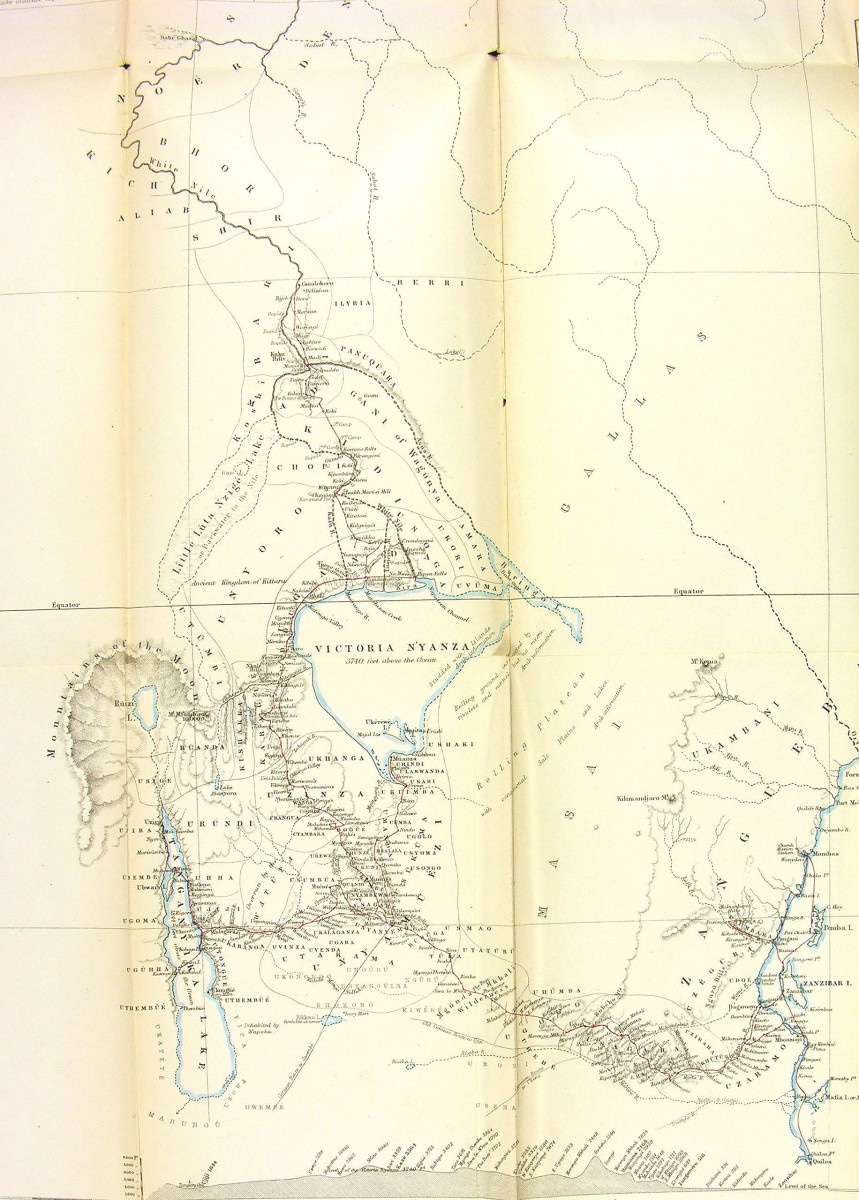
From Ireland to Oxford, into and through Old Europe, from Sri Lanka to Boston, from Zanzibar to the very source of the Nile.
In this book we also get more Boyd obsessions — numerous lovers, a few friends, broken families — but also more cultural artefacts. We have one or two references to the Russian novelists Boyd so admires (in this case, a photograph of Turgenev — although the work of Chekov appears in Any Human Heart and a plot from Pushkin is happily lifted for Love Is Blind).
We have a litany of historical characters and settings — Byron and the Shelleys, Richard Francis Burton and John Hanning Speke, the battle of Waterloo; these are things that in the hands of another novelist would seem both very brave and also very cheap to bring in. In this case, these little curlicues are entertaining rather than self-aggrandising.
These characters may be great historical figures, but they are — as in other Boyd books — merely people his own characters encounter. Interesting or dull, friendly or hateful, they escape their own clichés and histories rather well. Things are not predictable, even if you know how it all ends in reality.
To detail too much of the plot would be, I imagine, a mistake; but I can assure possible readers that rather a lot happens. Ross’s is an uncommonly full life. But his life is also marked by something else, a Boyd staple: a sense of how, in fiction as in reality, things never go quite as anticipated.
People try their best but things do not work. They anticipate pleasures and rewards that do not arrive, and find solace and consolation in other things. People are distractible. They lose threads often. Circumstance and their own caprice gets in the way.
Previous books in this vein had particular excuses for why things derailed or found unexpected paths. In The New Confessions, John James Todd, the protagonist, gives himself excuses: he claims to be a passionate man, not prone to deliberation, and in ultimate thrall to the randomness of the universe. Todd is also not an entirely nice man, something to the book’s, and its author’s, credit.
As the title might suggest, this novel is not dissimilar. Especially in youth, Ross is driven by his own neuroses and feels a repeated pull to travel, a call to adventure which keeps recurring in life — like an old warhorse hearing again the bugle’s call.
But for all his rashness and misbehaviour, there is an essential goodness to Ross. He does not do things for evil reasons, only because his nature compels him to act. Unlike some of Boyd’s other protagonists, for example, Ross is not terribly vain; he also listens, occasionally, to good advice.
He also really loves people, and is capable of real friendship with both lovers and companions.
His view of life becomes very simple. You can try your best, you can do everything you think will produce specific outcomes, and it may simply not happen. Time passes, people die, others arrive in our lives, great desires go unfulfilled — or we realise they matter to us less than we had thought.
Be of good heart, as Ross is — life is very wonderful and various, but nothing is certain. Instead we are all borne along, ceaselessly, by the tide.