
Press Gang
The Paper Palace by Robert Harling

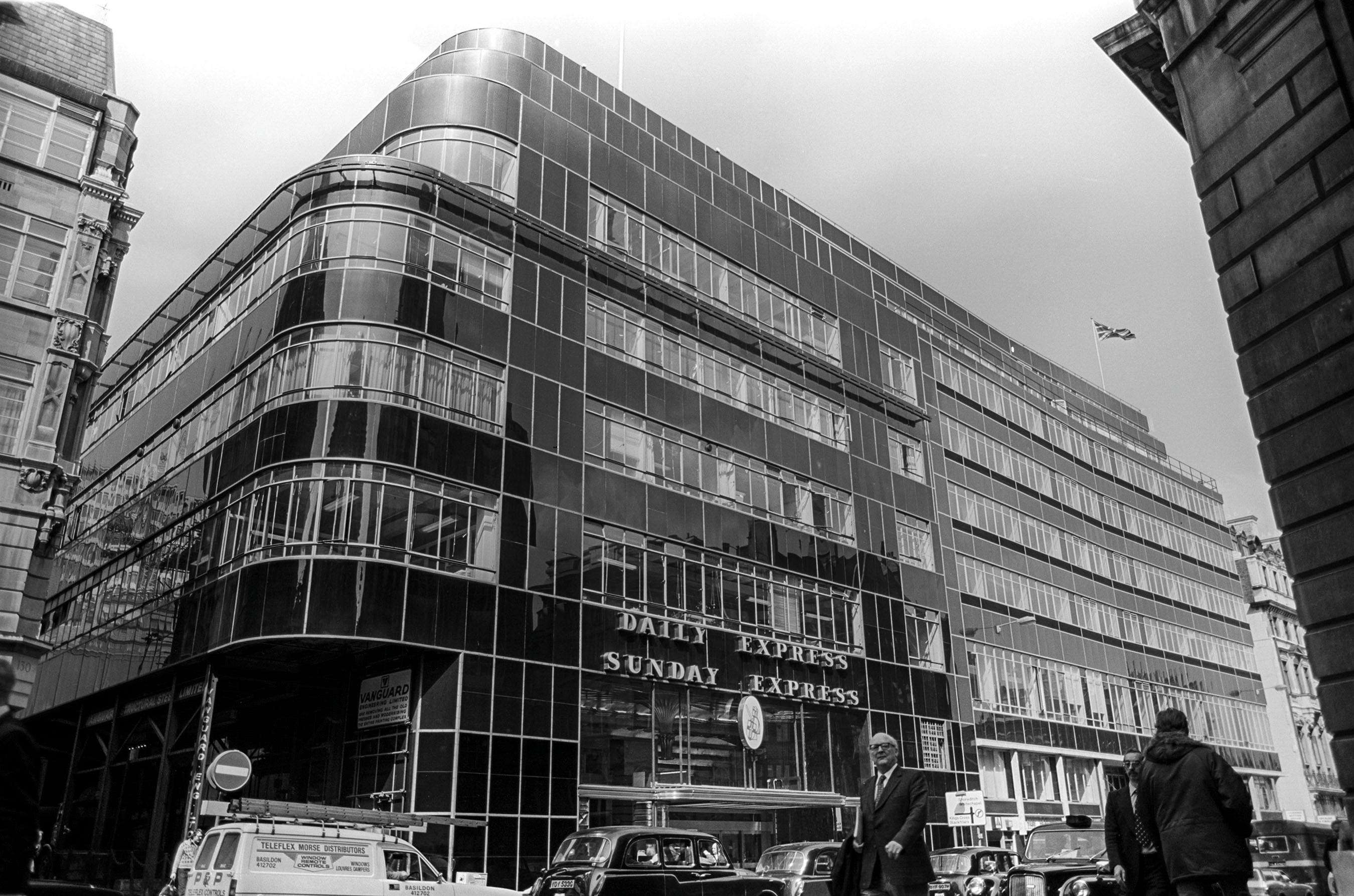
Novels about journalists can be as formulaic, in their way, as novels about detectives. They share some of the same hallmarks. They fall a little too easily into clichés. Reporters can be as cynical and cutting as gumshoes. Each can have their stock of faux-snappy dialogue. They do some of the same work. Each ferrets and digs, perhaps getting lost at first, before emerging blinking into the light — in service of revelation and the plot.
This novel is a cut above, but it took a while for me to be certain. It’s written by Robert Harling, a contemporary and friend of Ian Fleming’s (which I found out after I’d finished the book), but Harling writes with less of the sharp efficiency of his pal. Harling was, in life, something of a man of many worlds — his most lasting achievements are in typography. But he wrote novels, like this one, and inhabited the world of journalism in which it is set. It is possible he never achieved greatness in any field because he refused to confine himself to any one of them.
The book begins in a slightly inauspicious way. The prose is a little too self-confident, a little too easy. It moves about and flows, with many long sentences, ‘and’s, and happy repetitions, until one wonders whether this is a parody of the journalist’s glibness, or rather the thing itself. Some of the descriptions of places and people could have been ripped wholesale from back editions and bad style guides. Quite a few pregnant pauses are said to have lasted for a thousand years or so.
At this stage, the reader does not intuit brilliance so much as confidence from the author.
But as the plot actually kicks into gear, all fear of bagginess and bromide begins to recede. I’ll relate the plot in thumbnail form. The protagonist is a hack writer at one of the trashier titles. It has a circulation of a million a day or so. He writes a Tit-Bits or Readers’ Digest style column called Objects and Subjects. Six paragraphs, each on a discrete item. It is resolutely trivial and low-brow. Readers love it. It takes the writer an hour to produce every day. He doesn’t seem very proud of it.
A communist called Waterman dies, off stage in Tito’s Yugoslavia; and the newspaper’s owner, the Baron, reaches down from Olympian heights to the journalist, and insists on writing a small featurette on the man now dead. The journalist notes that this is an odd intervention, and his editor, Wensley, agrees. No connection appears extant between the Baron and the Red now dead. But one seems to exist, and it must be found — if Wensley is to have his biography of the Baron ready for the moment the old man departs, and if the journalist is to remain in his editor’s good favours.
The chase mainly takes the journalist to record offices and to see the commie’s ancient mother. He’s a failed historian, and keen to attribute the vagaries of his methods to new patterns in historical research. He spends a lot of time drinking tea and occasionally whisky in other people’s parlours. The subject of the Anglo-Irish wars slowly rises to the top of the glass. But there is intrigue, there is a young redhead who was once the commie’s secretary and mistress, there is happening, there are little excitements, and slowly, even while the mystery remains totally impenetrable, even uninteresting, a little spell is cast by the author.
As all I have related makes clear, this is a book about another age. When newspapers had circulations, and libraries of cuttings where one could learn things, and when people cared very little about their work, but very keenly about keeping their jobs. When the journalist goes to one of the Baron’s little parties, ‘rusty evening suit’ applied, he is able to see — while saying nothing — the social scene in all its grossness and absurdity before the women retire and the port makes its way around.
This book has none of the satirical bite of Evelyn Waugh’s Scoop (by common consent, the best novel about the habits and villainies of journalists), but it is a mystery story with a fine plot and a good, suitably climactic ending.
One is reminded of other press barons in print: William Gerhardie’s Lord Ottercove and Evelyn Waugh’s less parodically named Lord Copper. Harling’s portrayal of the Baron does not approach them in comic absurdity, nor necessarily in social acuity. Gerhardie loved Beaverbrook once, while Waugh despised the whole lot of them and their blandishments. But Harling’s Baron is a mercenary, a minor tyrant, a man pleased with himself and jealous of his advantages, and he has cold, calculating eyes. It’s not a bad pen portrait of a man in a now ancient mould.