
Reaction
Bismarck: The Man and the Statesman; The War Lords; How Wars Begin; Revolutions and Revolutionaries; and How Wars End by A. J. P. Taylor

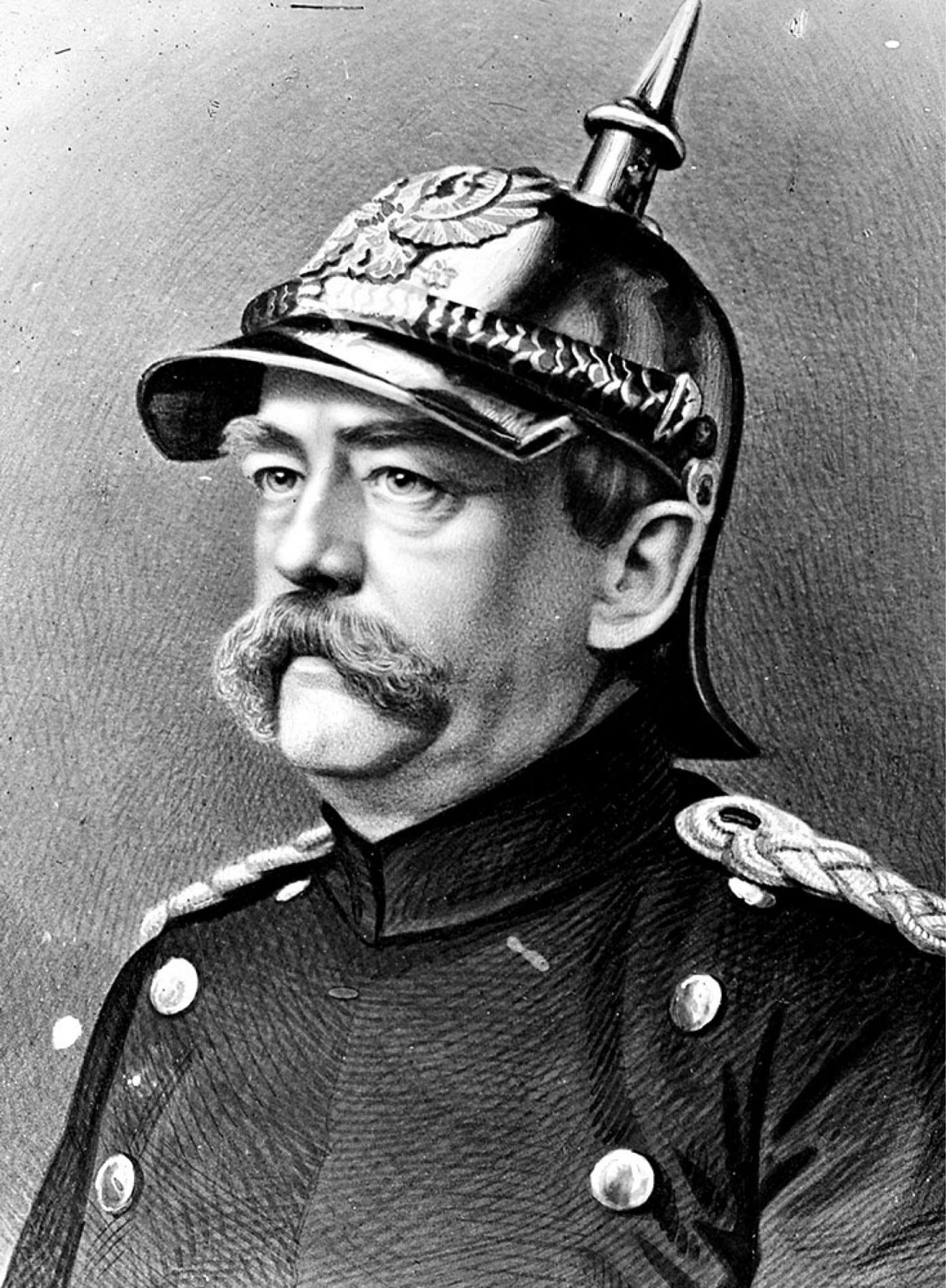
Of this handful of books, A. J. P. Taylor’s biography of Otto, Prince of Bismarck, Count of Bismarck-Schönhausen, Duke of Lauenburg, is the work of true scholarship; the rest are collections of lectures, lightly edited, which the historian had entrancingly delivered on television. They read rather well, despite having been extemporised, and contain many interesting asides and well-chosen pictures. And they serve to elaborate rather well on some of his themes.
How Wars Begin and How Wars End note that there is little consistent in history — all is a desperate bid to keep heads above water. Revolutions and Revolutionaries shows that a revolutionary tide can terrify as easily as it can splutter to a halt. These books are better because of their informality; they contain fun little asides and jokes — the kind a favourite teacher might delight in.
Taylor’s biography of Bismarck, meanwhile, is a beautifully written book — short, but full of insight and clarity. The first chapter alone, which describes Bismarck’s uneasy and bipolar upbringing, is a great introduction to the man. Bismarck wanted others to see him as a Junker, a particular type of landed Prussian aristocrat, ignorant and militarist. Yet his mother was an intellectual, and wanted her children to be thinkers.
Bismarck played at farmer and industrialist in his later years, and pretended to have great Lutheran religious faith; he claimed to have his happiest moments in seclusion in the country, and spent much of his final years in government cloistered in one of two great rural estates. But he was a radical in his youth, was bored without politics to distract him, and charged god less with universal magisterium than the job of keeping Bismarck’s worst impulses — romantic and even perhaps political — unacted upon.
A man who sent his country into three wars, Bismarck claimed to dislike conflict as an instrument of policy: because he was told by the old field marshal von Moltke that its outcome could never be certain. (But ‘Not through speeches and majority decisions will the great questions of the day be decided — that was the great mistake of 1848 and 1849 — but by iron and blood’, he said.)
He saw the bodies of men whose lives he had spent, and worried about his son ending up among them in a future conflict. Yet Bismarck was given honorary promotion to the rank of general after 1866, and often wore a general’s uniform in public for the rest of his life.
Bismarck was a big man who overate, and spent some of his youth desperate to get into fights in order to prove his cojones. But he cried easily, and often; and this supposed master of calculation — domestic and foreign — had screaming rows with his opponents in which he not infrequently threw crockery.
He bestrode the national political scene as prime minister, foreign minister, and chancellor of Prussia, the North German Confederation, and the German Empire, but claimed to know no economics and have no time for politics. He was a radical in youth, then a reactionary champion of absolute monarchy, then a unificationist liberal, then an ally of the newly-formed National Liberals, before falling into a deep institutional conservatism which still allowed Bismarck to pass universal suffrage and one of the first national insurance programmes, including health insurance, ever to be instituted — all to defeat the socialists (whom he also repressed directly by law).
He persecuted Germany’s Catholics in a Kulturkampf but counted Pope Leo XIII as an ally.
He was a man who claimed to have no economic sense, yet became rich through monopolies and avoiding tax, and served as his country’s trade minister concurrently with other posts. (Taylor thinks that, rather than a rural Junker, Bismarck might most have resembled in temperament a Hamburg merchant.)
The champion of the king’s and emperor’s will, holding office not through parliamentary majorities, but rather at the kings’ and emperors’ pleasure, Bismarck considered his first, beloved emperor a man to be boxed in and managed, and the emperor’s two successors to be enemies. Each threats to Bismarck’s capacity to run the country as it must be run.
Much can be made of this life of contradiction, and indeed Taylor does exactly that. But he does not miss the subtle point: that for Bismarck, contradicting oneself was no barrier, nor something to worry about. Expediency was all — remaining in power by any means was the sole objective. One must be in power to govern, and one must govern to govern correctly.
Bismarck first came to power in September 1862 after a Prussian political crisis, barely fifteen years on from the Europe-shaking year of revolutions in 1848. He had previously spent some time as a diplomat in St Petersburg and Paris, unhappily carrying out others’ instructions.
He arrived at the head of a Prussia which was still second fiddle in Germany to the Austrian Empire of the Habsburg dynasty. Within ten years, Bismarck engineered three wars, all of which Prussia, and then the German Confederation, won. He gave Germany its greatest extent and much of its present state.
First, in 1863, one year after taking office, Bismarck oversaw the defeat of Denmark and the seizure of the duchies of Schleswig and Holstein, with Austrian help. Three years later, working in concert with smaller German states, he saw Prussia defeat Austria in the lightning Seven Weeks' War, forming the North German Confederation (of which Bismarck became Federal Chancellor) in the process. Finally, in 1870, Bismarck led Germany into the Franco-Prussian War against Napoleon III, a war which began with the rapid defeat and capture of the French emperor, but dragged on for months afterwards, including a protracted siege of Paris, before the civilian government could agree terms.
The empire, as the confederation became, gained Alsace and Lorraine, and more than one generation of problems. Wilhelm I was crowned German Emperor at Versailles at war’s end. (Bismarck had insisted, to the emperor’s chagrin, that he not bear the title Emperor of Germany).
Later Germany, and Bismarck, organised congress after congress and conference after conference, which hammered the world into a kind of shape for European eyes. The powers scrambled for Africa and prevented war between Turkey and the Slavic states. Germany even acquired some colonies, although Bismarck had little use for them.
Taylor admires Bismarck, and it is not difficult to see why. On their face, these are impressive achievements. But what they do not convey is the constant scramble which Bismarck’s policy entailed. There was no plan, no final form — at least not before the battle of Sedan deposed the third Napoleon.
It was little short of brilliantly adaptable opportunism on a European scale.
The number of alliances Bismarck both planned and signed is difficult to keep up with. When he wanted to redraw the European map, with Prussia at its centre, he attempted to ally with the revisionist powers of Napoleon’s France and the Russia of Alexander II. Later, when Austria became a target in the path of Prussian growth in Germany, Bismarck allied with the new state of Italy, hoping that it (and France) would keep Austria’s Venetian flank busy. Not far later, Bismarck considered a ‘Crimean coalition’ against a Russia gone amok — and sought any combination to stop war between Russia and Turkey, and the new nations in the Balkans. He talked of an old coalition called the Holy Alliance, established by Napoleon I’s enemies, although he did not resurrect it. Later, in his old age, he spoke of a conservative bulwark in the form of the League of the Three Emperors — including the sovereigns of Austria, Russia and Germany — all to stop any of the other two allying with France. The only power Bismarck never courted was England — despite significant domestic German support — and possibly only because he thought Gladstone’s interventionist liberalism laughable, not least for its moral pretensions. Finally, he tied Germany to Austria with a thread that would prove too tight, and would in less than forty years destroy the empire Bismarck had built.
At first, Bismarck concluded alliances a short time in advance, solely in order to go to war. He ended his term signing the Dual Alliance with Austria that would, decades later, drag the German Empire into its fatal conflict.
As one might imagine, this was a tangle, and required constant management. First Bismarck wanted to remake Europe, assuming the pieces would fall where he left them — later he sought, the reactionary at heart, to sustain his own conception of the Balance of Power: an equilibrium futilely moulded by many would-be great statesmen over the centuries. Not only did Bismarck become a titan reactionary; he built a system dependent on reaction — namely, his own capacity to react to events.
But after his fall from power became inevitable, the man’s legacy could be fully seen.
The results of a man of ice and steel who was subject to floods of tears and shattering anger; a paramount leader largely uninterested in national politics, with few legislative triumphs, unmatched by any in the art of political hypocrisy; and a diplomat of utmost brilliance, whose conception flexed and bent to achieve remarkable goals, who ended his days creating a rigid system of international affairs which soon became a prison for Germany, and which fell entirely to pieces after entering the care of lesser men. Bismarck created and shaped the German Empire. But in doing so, and in ruling it for decades, he ensured its final destruction.
Later on, after his first emperor died and Bismarck was forced to confront two hated successors, ‘He would talk in his soft melodious voice — always recollections of the past, never a reference to the present; and these recollections improved in the telling.'
Bismarck in old age is a pitiable thing. ‘He no longer wanted to create; he wanted to preserve, and this soon turns into negation. … He had once condemned those who put the clock forward. Now he tried to make it stop.'
At the end of his term in office, after Bismarck was thrown from power in 1890 by Wilhelm II, the man who would provoke the First World War: ‘No human beings existed for him except his wife and children; there was no thought of his great achievements, no hint of policy for the future; the German Reich, it seems, had been brought into existence solely to save Bismarck from boredom — and now it could fall to pieces.'
Taylor makes a mistake in considering the tragedy of Bismarck’s life to be his failure at the hands of age and weakness. It is a universal tragedy, and not Bismarck’s alone. But instead, the failure of Bismarck’s life is not the toll time took, but the knowledge that for all his brilliance, and with all the time in the world, Bismarck would not have succeeded in sum. His system would have failed. New events would have shaken his balance, new men would have arisen. One of them eventually did in the shape of Wilhelm II.
Even if he were young and strong, Bismarck could not have saved his country. He had created it, built it, made it an empire. But his policies, whether continued or abandoned, ensured the destruction of the Reich he had served.